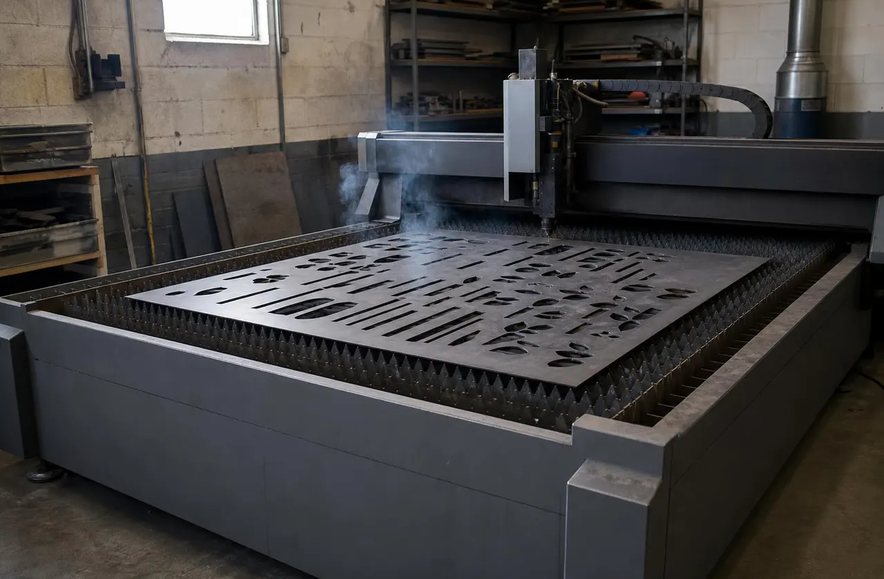
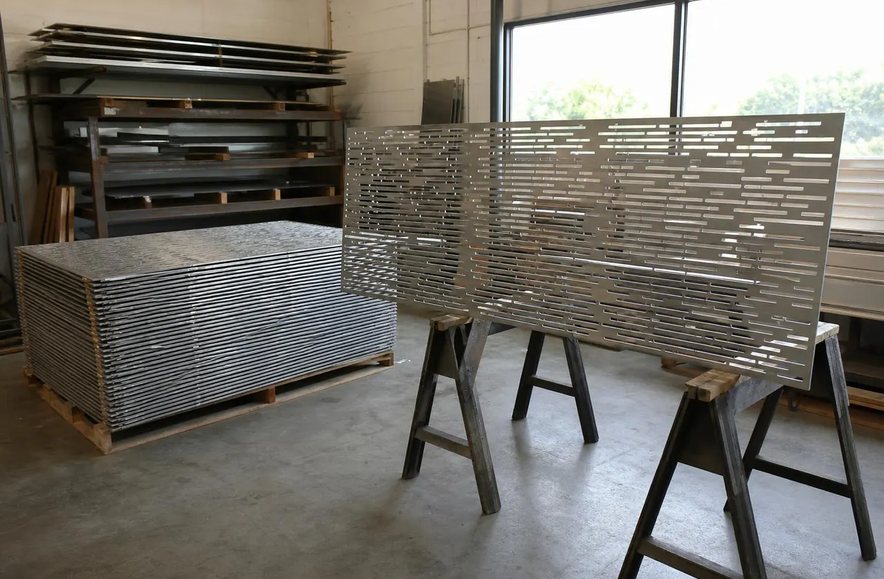
A perforated panel is a simple thing that does a lot of work. It screens a view without closing a room, softens a long blank wall, lets light and air through a cabinet front and gives a reception counter a face that people remember. The pattern, the hole size and the spacing decide how it feels, and the finish decides how it ages in a busy space.
We make panels for designers, fit-out teams, furniture and fixture makers and retail display shops. Each panel is cut from flat sheet, edged by hand so it is pleasant to handle, flattened where needed and finished to the sample you approved. Then it is wrapped and labeled so the order on the drawing is the order in the crate.
What we make
Interior screens
Room dividers and privacy screens with a pattern that balances openness and cover.
Counter and desk cladding
Perforated or solid face panels for reception counters, service desks and bar fronts.
Decorative wall inserts
Panels that sit in a frame or a recess to add texture to a lobby, corridor or dining room.
Display and cabinet fronts
Vented fronts for display cases, equipment cabinets and retail fixtures.
Choosing a pattern that suits the room
Round holes read calm and even. Slots add direction and look longer than they are. Hexagons pack tightly and feel technical. Leaf and organic cuts bring warmth to a restaurant or a hotel lobby. Density matters as much as shape: an open pattern lets more light and view through, a dense one gives more privacy and a stronger shadow. Try the combinations in the Perforation lab on our home page, then send us the one closest to what you have in mind.
If you have your own pattern, send it as a vector file. We check the bridge widths between openings so the panel stays flat and stiff, and suggest small changes where a pattern would be fragile at the size and thickness you want.
Edges, frames and returns
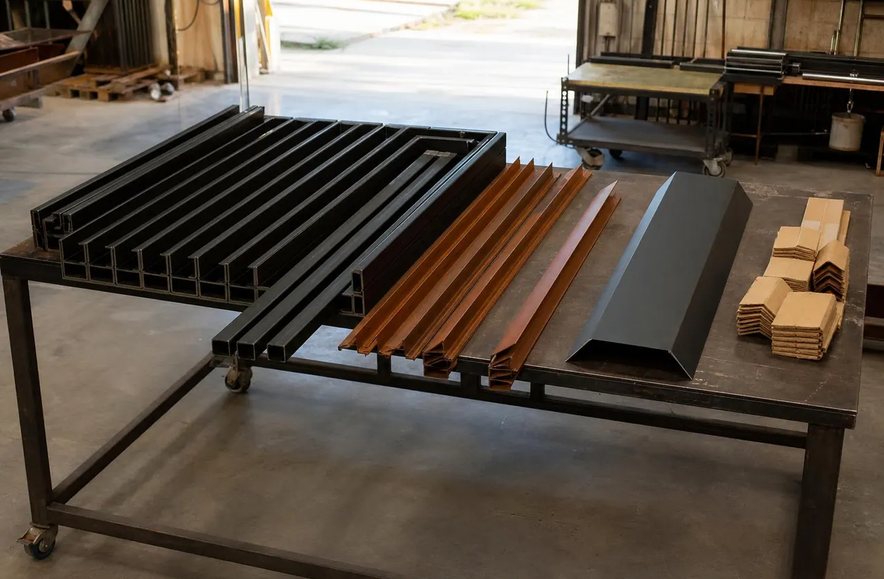
A panel can be a flat sheet with clean edges, a sheet with folded returns that hide its thickness, or an insert in a separate frame. Folded returns make a panel stiffer and give it a finished look from the side. We discuss which suits your detail when we quote, and we keep the solid border around the pattern even on every panel in the set.
Metal panels manufacturing: common questions
Can you cut our own pattern?
Yes. A vector file (DXF, DWG, AI or SVG) is the quickest start. A clear image works for a first conversation, and we redraw it for your approval.
Which material should a panel be?
Aluminum is light and easy to handle on big screens. Steel is economical and takes paint well. Stainless suits places that are touched and cleaned often. The Finishes page explains the look of each.
Will the panels stay flat?
We design patterns with enough solid metal between openings and flatten panels after cutting where needed. Very open patterns on thin sheet may need folded returns or a frame, and we tell you before quoting.
Can you make one sample panel first?
Yes. For a set, a single sample panel or a smaller cut sample is a good way to agree on pattern and finish before the full run.
Do you paint the panels?
We supply panels raw, ground, brushed, polished or prepared for paint. If you want color, we prepare the surface and you send them to the coating shop you prefer.
Cookies. We use necessary cookies so pages and forms work. With your OK, we may also use analytics and advertising cookies. Your choice is remembered for 6 months. Cookie Policy
Manage Cookies
Here you decide which optional cookies may run. Your setting is saved for 180 days. Browsers that send a Global Privacy Control signal are treated as having rejected optional cookies.
Strictly necessaryAlways on
Keep the site working and secure and remember your cookie choice.
Show which pages people read, so we can improve them. Off by default.
Measure whether an ad led to a quote request. Off unless you turn it on.
Because your browser sends a Global Privacy Control signal, optional cookies are kept off.