Laser cutting turns a drawing into a flat part with very little fuss. A file goes in, and a sheet comes out with every outline, hole and slot where it belongs. For design work that means intricate patterns are practical, small parts can be repeated exactly, and pieces that will be folded later start with accurate flat shapes.
We cut for design studios, sign and display makers, furniture builders, equipment assemblers and other shops that need flat parts without keeping a cutting table of their own. Many jobs go on to bending or finishing with us, but cut-only work is just as welcome.
What we make
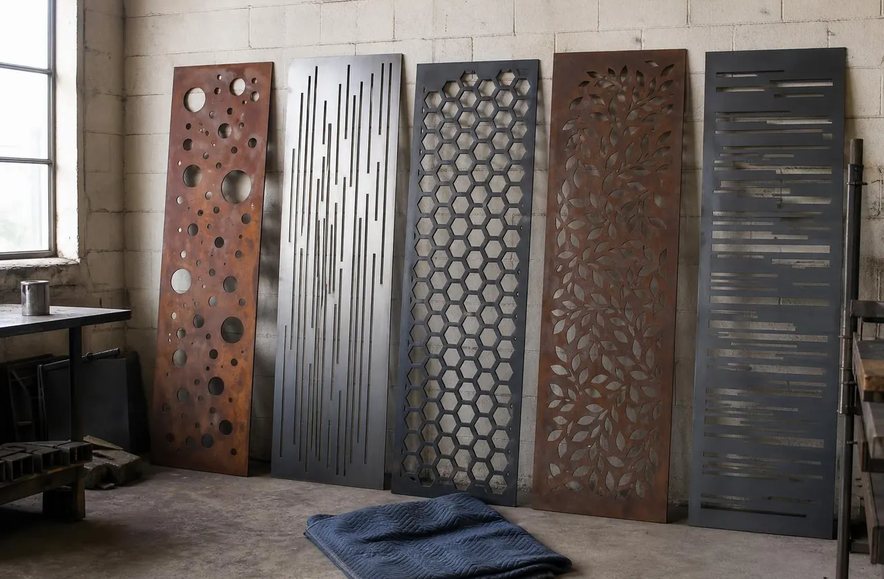
Decorative patterns
Perforated and pictorial patterns for screens, panels and inserts.
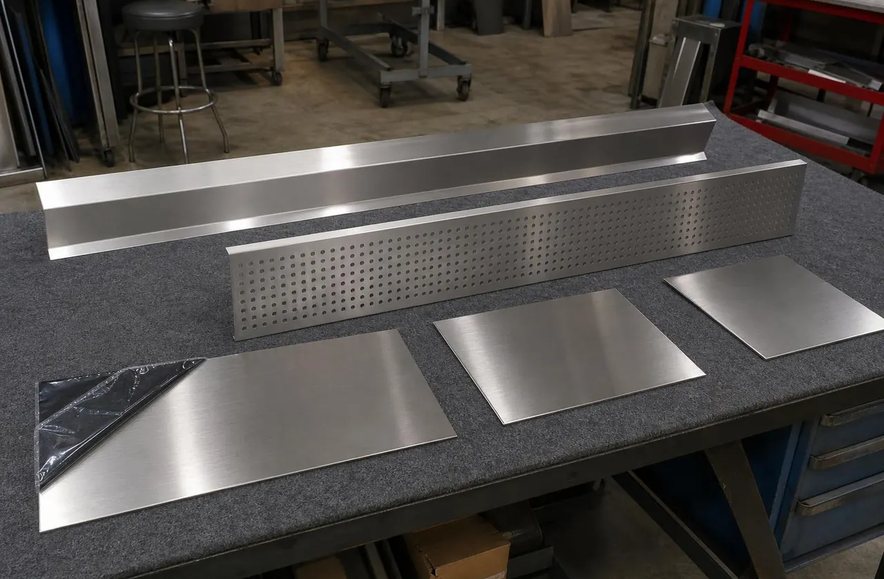
Flat parts and plates
Brackets, gussets, spacers, base plates and mounting plates cut to outline.
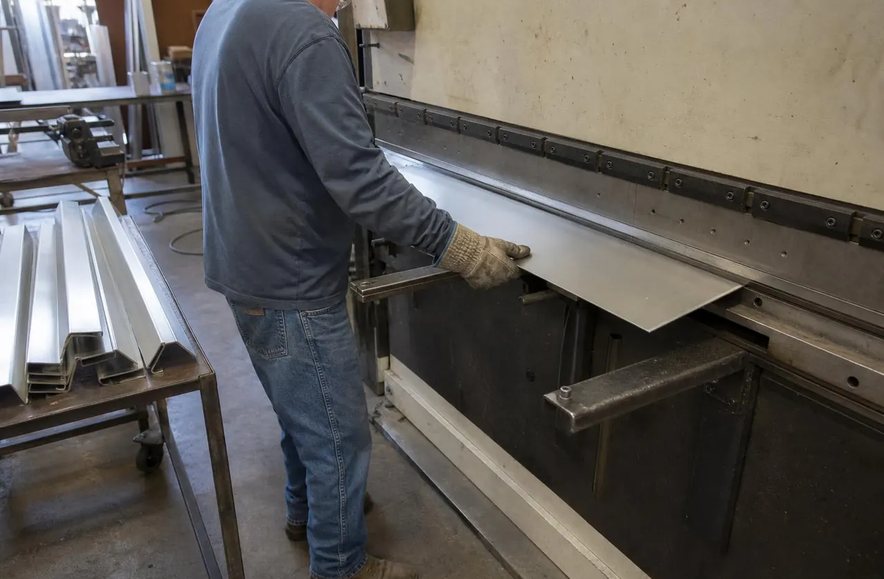
Blanks for bending
Flat shapes with relief cuts and bend lines ready for the press brake.
Letters and shapes
Cut lettering, logos and shapes for signs and displays, made to your artwork.
Getting the file right
A clean vector file is the quickest start: closed outlines, one layer for cuts, a note on material and thickness. We open every file before quoting, look for open lines, doubled paths and details too small for the sheet you chose, and send back a short note if anything needs a change. Small text and very thin bridges are the usual suspects.
If all you have is a sketch, a photo of a sample or a paper template, send it. We can draw the part for you and send the drawing back for approval before cutting.
Edges and what happens next
Cut edges are clean but still sharp to the touch. Parts that people handle are deburred, and visible edges can be ground or brushed to match the face. If the parts go on to bending, we plan the flat pattern so holes near a fold stay round and the finished size comes out right. Cut parts are sorted, counted and packed by part name, so a mixed order is easy to unpack.
Laser metal cutting: common questions
What file formats do you accept?
DXF, DWG, AI, SVG and PDF with vector lines. A clear sketch or photo with dimensions is fine for a first conversation.
How small can holes and details be?
It depends on material and thickness. As a rule, details should be no smaller than the sheet is thick. We confirm what is practical for your part in the quote.
Do you cut single pieces?
Yes. One sample or one replacement part is a normal job here, as are small batches and repeat runs from the same file.
Can you supply the material?
Usually. We source common steel, stainless and aluminum sheet. If you need a specific sheet, tell us and we check what is available.
Do cut parts come deburred?
We deburr parts that will be handled or seen. Tell us if you prefer raw edges for your own finishing.
Cookies. We use necessary cookies so pages and forms work. With your OK, we may also use analytics and advertising cookies. Your choice is remembered for 6 months. Cookie Policy
Manage Cookies
Here you decide which optional cookies may run. Your setting is saved for 180 days. Browsers that send a Global Privacy Control signal are treated as having rejected optional cookies.
Strictly necessaryAlways on
Keep the site working and secure and remember your cookie choice.
Show which pages people read, so we can improve them. Off by default.
Measure whether an ad led to a quote request. Off unless you turn it on.
Because your browser sends a Global Privacy Control signal, optional cookies are kept off.